Skip to content

What We Do

Our Organizations aim to end poverty by fostering self-reliance, enhancing economic opportunities, and providing essential services. Key activities include empowering entrepreneurs, promoting sustainable agriculture, investing in skills development, improving market access, and delivering healthcare and education to break the cycle of poverty.

We are Working in

Agricultural Development

Agricultural development in Ethiopia is the primary strategy for poverty reduction, with the sector contributing ~35-38% of GDP and employing most of the population. Key initiatives focus on enhancing smallholder productivity, irrigation, climate resilience, and market access through programs

Natural Resource Management & Rehabilitation

In Ethiopia, natural resource management (NRM) and rehabilitation are central to poverty reduction because over 80% of the population depends on rain-fed agriculture. Several organizations and government programs integrate environmental restoration with economic development

Education Program

In Ethiopia, education is a primary pillar for breaking the cycle of poverty. Several organizations and government-led initiatives focus on increasing school access, improving the quality of teaching, and providing vocational training to vulnerable populations.

WASH (Water, Sanitation & Hygiene)

In Ethiopia, WASH (Water, Sanitation, and Hygiene) is considered a “multiplier” for poverty reduction. By reducing the time spent fetching water (predominantly by women and girls) and lowering the incidence of waterborne diseases, these organizations directly boost economic productivity.
 

Health & Nutrition

Health and nutrition are viewed as “human capital” investments. High rates of stunting and preventable disease create a cycle of poverty by reducing workforce productivity and increasing household medical expenses.
 

Environmental Protection & Green Development

In Ethiopia, environmental protection is inextricably linked to poverty reduction through the Climate Resilient Green Economy (CRGE) strategy. Since the majority of the poor rely on land for survival, restoring ecosystems directly improves food security and household income.
 

Income Diversification & Livelihoods

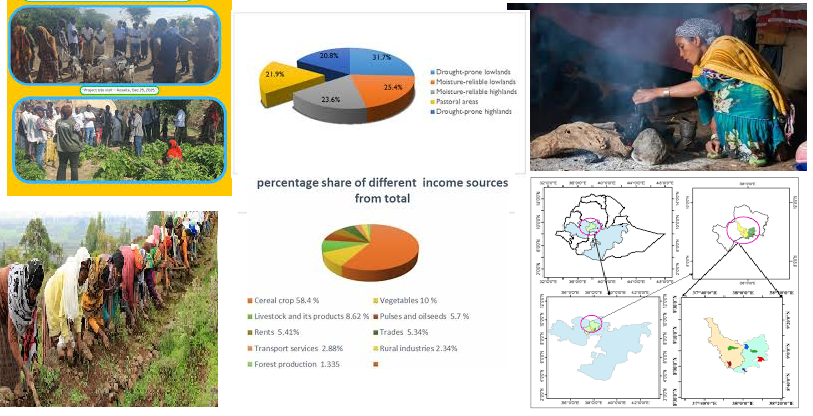
Income diversification is a critical strategy to reduce dependency on traditional rain-fed agriculture. Organizations in this sector focus on creating non-farm jobs, improving market access, and providing micro-financing to help the rural and urban poor build resilient livelihoods.


Women & Youth Empowerment

Empowering women and youth is seen as the “missing link” in poverty reduction. Since women reinvest 90% of their income into their families and youth make up over 70% of the population, organizations focus on financial inclusionvocational training, and rights-based advocacy.
 

Child Development & Protection

Child development and protection are foundational to long-term poverty reduction. Programs are designed to address “multidimensional child poverty,” focusing on holistic well-being rather than just financial aid.


Humanitarian & Emergency Response

In 2025 and 2026, humanitarian and emergency response in Ethiopia is defined by a “hyper-prioritized” approach to address overlapping crises including conflict, climate shocks (La Niña-induced drought and floods), and disease outbreaks like cholera and Marburg.

Migration, Peace & Social Cohesion

Ethiopia’s approach to poverty reduction recognizes that instability and displacement are the primary drivers of economic decline. Organizations now prioritize the Humanitarian-Development-Peace (HDP) Nexus, linking immediate aid to long-term social stability.